Crypto & TokensExplainer
What are the real risks of investing in crypto?
Crypto can lose most of its value, platforms can fail and scams are common. A plain guide to price, custody, platform and fraud risk, with numbers.
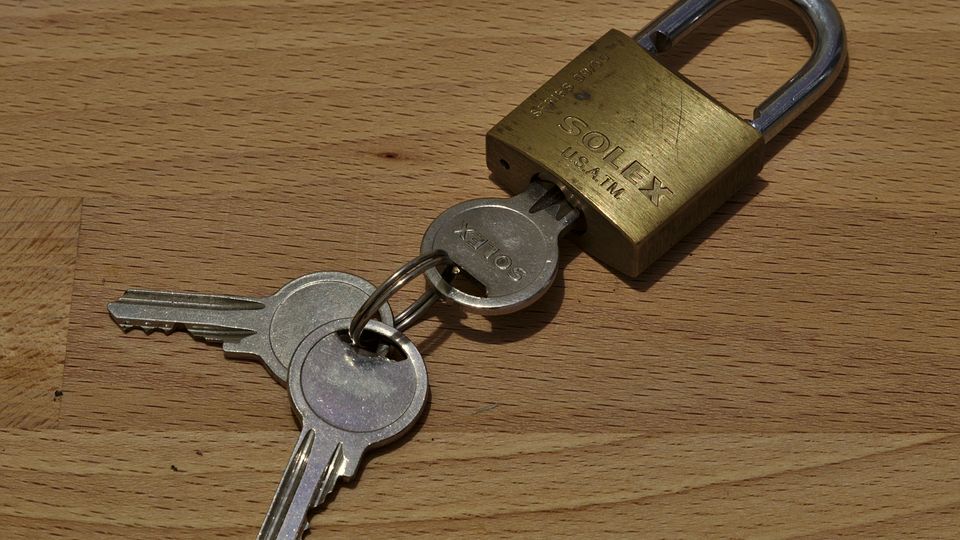
.jpg)
Quick answer
Crypto's main risks are steep price falls, losing access through lost keys or a failed platform, weak investor protections and widespread fraud. U.S. regulators warn that crypto prices can swing widely, and crypto accounts are not covered by FDIC or SIPC. Only risk money you can afford to lose.
Key points
- The SEC calls crypto asset securities exceptionally volatile and speculative, and the CFTC says virtual currency prices rest only on supply and demand.
- A fall of 50% needs a 100% gain just to get back to where you started; a 90% fall needs 900%.
- If you lose your private key, or the company holding your crypto fails, you may lose access permanently.
- Crypto accounts are not protected by FDIC deposit insurance or SIPC.
- In 2025, Americans filed 181,565 complaints involving cryptocurrency with the FBI, with reported losses of more than $11 billion.
Why is crypto riskier than most investments beginners meet?#
Every investment carries risk. The SEC's investor site defines risk as the degree of uncertainty and/or potential financial loss inherent in an investment decision[1]. Crypto stacks several kinds of that uncertainty on top of each other.
Start with price. The SEC warns that investments in crypto asset securities can be exceptionally volatile and speculative[2]. The CFTC explains why: the value of virtual currencies is completely derived by market forces of supply and demand, and they are more volatile than traditional currencies[3]. A share of a company has profits behind it; a bond has promised interest. A token with neither has only demand under its price, and demand can disappear quickly. If the general idea of risk is new to you, read risk and return first.
Then add the plumbing. The CFTC notes that most crypto cash markets are not regulated or supervised by a government agency and that platforms may lack critical system safeguards[3]. And add the people: the SEC says crypto asset securities-related investments continue to be replete with fraud[2].
What are the main types of crypto risk?#
| Risk | What it looks like | What regulators say |
|---|---|---|
| Price risk | The price falls sharply and stays down | Exceptionally volatile and speculative (SEC) |
| Liquidity risk | Few buyers, so you can only sell at a much lower price — or not at all | The market for a particular asset may disappear (SEC) |
| Custody risk | You lose your key, or your wallet is hacked | Losing the private key means permanently losing access (SEC) |
| Platform risk | The company holding your crypto fails or shuts down | The company holding your assets may fail or go bankrupt (SEC) |
| Protection gap | No insurance if a crypto firm collapses | No SIPC or FDIC protection for crypto accounts (SEC) |
| Fraud risk | Fake platforms, romance scams, pump-and-dumps | Fraud is widespread; no assurance of recourse if stolen (SEC, CFTC) |
Sources: SEC investor alert[2], SEC custody bulletin[4], CFTC advisory[3].
These risks can also arrive together: a token that is falling in price, held on a platform that is failing, means facing both at once. The rest of this note takes them one at a time.
How far can crypto prices fall, and why do losses hurt so much?#
Nothing guarantees a floor under a token's price. The SEC's Terraform case is an extreme example: the SEC reports that in May 2022 the stablecoin UST depegged from the U.S. dollar and the price of it and its sister tokens plummeted to close to zero[5]. That was a coin designed to stay at $1.
Losses also have a cruel arithmetic. After a fall, you need a bigger percentage gain to get back to where you started, because the gain is calculated on a smaller amount. We computed the recovery needed for four sizes of fall:
Gain needed to recover from a fall
This is why the size of a fall matters more than how often prices rise. Our notes on volatility and drawdowns and the short drawdown definition explain how these declines are measured.
What happens if a crypto platform or wallet fails?#
When you keep crypto on a trading platform, you depend on that company. The SEC lists the potential for the company holding your crypto assets to fail or go bankrupt, and warns that investors who deposit funds or crypto with some crypto entities might cease to have legal ownership of them[2]. In plain words, you could end up as one creditor among many, waiting for whatever is left.
Bank and brokerage customers have safety nets for some failures. Crypto customers usually do not: the SEC states there are no SIPC or FDIC protections for accounts placed with crypto asset entities[2]. Even stablecoins are not covered by deposit insurance.
Holding the key yourself swaps one risk for another. The SEC's custody bulletin warns that if your crypto wallets are lost, stolen, damaged or hacked, you may permanently lose access, and that if you lose your private key, the loss is permanent[4]. The CFTC adds that there is no assurance of recourse if your virtual currency is stolen[3]. See our private key definition for how keys work.
How common are crypto scams?#
Very. The FBI's Internet Crime Complaint Center (IC3) reported that, in 2025, Americans who submitted complaints involving cryptocurrency reported the highest losses: 181,565 complaints totaling more than $11 billion[7]. A year earlier, in its 2024 report, the FBI said victims of investment fraud involving cryptocurrency reported over $6.5 billion in losses[8]. These are reported losses only.
Crypto fraud in FBI complaint data
The SEC describes common lures[6]:
- Contact through social media, including professional networking, dating and messaging apps, sometimes followed by a friendship or romance to build trust.
- Hype about new technology, such as artificial intelligence, used to pitch "can't-miss" crypto schemes.
- Impersonation of official U.S. government sources in calls, texts, emails, letters and certificates.
- Pump-and-dump schemes, including so-called memecoins, where promoters inflate a price and then sell.
- Fees to withdraw, where victims are told to pay more before they can take money out.
Learn the general warning signs in investment fraud red flags. A single rule catches many of them: if someone you met online is steering you to a crypto platform, stop.
How can a beginner limit crypto risk?#
No step removes the risks above, but some keep them from becoming disasters. The CFTC's advice is direct: do not invest in products or strategies you do not understand, and only speculate with money you can afford to lose[3]. It also states that there is no such thing as a guaranteed investment or trading strategy[3].
Size it before you buy
Decide the most you could lose without changing your life, and keep the position at or below that.
Choose custody deliberately
Decide whether you or a company holds the keys, and learn the failure points of that choice.
Keep recovery information offline
Never type a seed phrase into a website or share it with anyone.
Ignore unsolicited pitches
The SEC warns that fraudsters often make first contact through social media, dating and messaging apps[6]. Treat any unsolicited crypto opportunity as suspect.
Plan for a deep fall
Ask how you would feel and what you would do if the price fell 80%. If the answer is "sell in a panic", the position is too large.
Worked example
Worked example: how position size limits the damage
A $10,000 portfolio puts different amounts into one crypto asset, which then falls 80%. Everything else in the portfolio is assumed to hold steady. Figures are hypothetical.
| Share of portfolio in crypto | Amount in crypto | Portfolio after an 80% crypto fall | Change in the whole portfolio |
|---|---|---|---|
| 5% of portfolio | $500 | $9,600 | -4.0% |
| 20% of portfolio | $2,000 | $8,400 | -16.0% |
| 50% of portfolio | $5,000 | $6,000 | -40.0% |
Figures computed in code from the stated inputs; rounded to the nearest cent or tenth.
The asset is the same in every row; only the size changed. That is the core idea behind diversification: no single holding should be able to sink the whole plan.
What mistakes do beginners make?#
Investing money needed for bills or emergencies
Crypto can fall far and fast. Money you may need soon should not be exposed to that kind of swing.
Trusting a platform because it looks professional
A polished website proves nothing about who runs it. Verify a platform independently, not through links or apps you were sent.
Sharing a seed phrase with "support"
No genuine support team needs your recovery words. Anyone who has them can take your crypto.
Buying more to "average down" without a plan
After a big fall the required recovery is large. Adding money only because the price dropped can turn a small loss into a large one.
What else do beginners ask?#
Can I lose all my money in crypto?
Yes. Prices can fall close to zero, as UST did in May 2022[5], and lost keys or failed platforms can wipe out access entirely.
Is crypto insured if an exchange goes bankrupt?
Generally no. The SEC says there are no SIPC or FDIC protections for accounts with crypto asset entities[2].
Is crypto in an ETF safer?
It removes some wallet and platform risks but not price risk. The SEC notes spot bitcoin and ether ETPs still carry the high volatility of the underlying crypto[9].
What is the bottom line?#
Crypto combines steep price risk with risks most beginners never face elsewhere: keys that cannot be replaced, platforms without insurance and an unusually large fraud problem. None of that means you must avoid it, but it does mean any crypto holding should be small, deliberate and something you understand. Decide the size before the price decides it for you.
Sources
Numbers in brackets in the text point here. Grade A = primary source (regulator, statistics agency, law or official document).
- 1
- 2
- 3
- 4
- 5
- 6
- 7
- 8
- 9