StocksExplainer
What is a stock, and what do you actually own when you buy one?
A stock is a small share of ownership in a company. Learn what you own, how stocks can make or lose money, and how common and preferred stock differ.
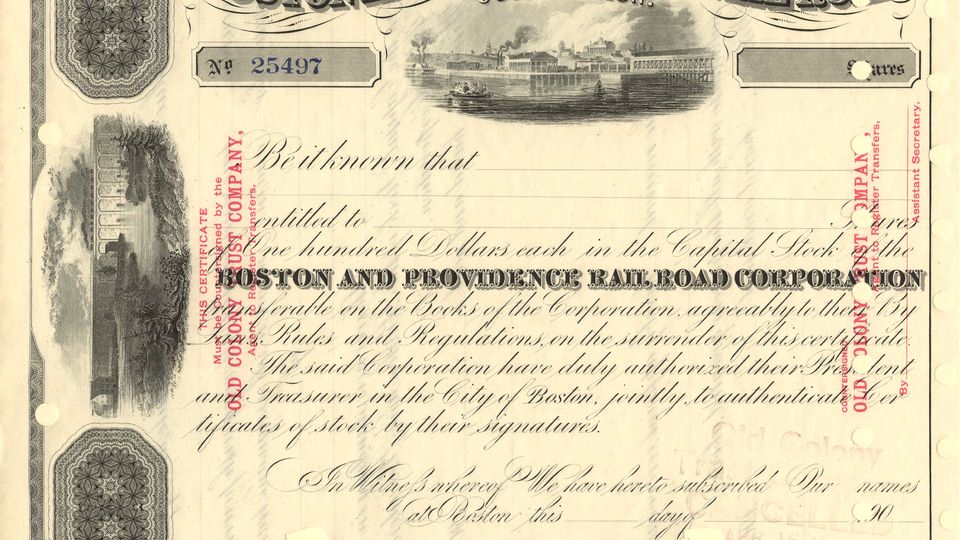

Quick answer
A stock is a security that gives you a small share of ownership in a company. Investors can earn money if the share price rises or if the company pays dividends. Neither is promised: prices move down as well as up, and you can lose money.
Key points
- A share of stock is a small piece of ownership in a company; stocks are also called equities.
- Stocks can reward you in two ways: a higher share price (capital appreciation) and dividends.
- Common stock usually carries voting rights; preferred stock usually does not, but its dividends are paid first.
- If a company fails, bondholders and preferred holders are paid before common stockholders, who are last in line.
- A stock's value depends on the company's future, which nobody knows — so stock prices fall as well as rise.
What does it mean to own a share of stock?#
The SEC's investor education site puts it simply: stocks are a type of security that gives stockholders a share of ownership in a company[1]. A security is a tradable financial asset, such as a stock or a bond. A share is one unit of that ownership. If a company has two million shares and you hold 100, you own one twenty-thousandth of it.
FINRA describes the same idea from the buyer's side: when you invest in stock, you buy ownership shares in a company, also known as equity shares[2]. That is why you will often hear stocks called equities. Owning a share does not mean you can walk into the company's office or use its property. It means you have a claim on part of the business's value and, for most common stock, a vote.
Why do companies sell stock in the first place?#
Companies sell shares to raise money without borrowing it. The first sale to outside investors usually happens in an initial public offering (IPO). When newly issued securities are sold to investors and the issuer receives the proceeds, that is called the primary market[3]. The company can use the money to build, hire or pay off debt.
After the IPO, investors trade the existing shares among themselves on the secondary market — markets where existing securities are bought and sold[4]. When you buy a share through a brokerage app, you are almost always buying it from another investor, not from the company. Our note on how stock exchanges work follows an order from your screen to a trade.
Selling stock to the public comes with duties. In the U.S., public companies must keep shareholders informed by filing periodic reports, including an annual report (Form 10-K) with audited financial statements and quarterly reports (Form 10-Q)[5]. The SEC makes these filings free to read on its EDGAR website[5]. Rules differ by country, but most major markets require some form of regular disclosure.
How a share reaches you
How can a stock make or lose money for you?#
Investor.gov lists two ways stocks can pay off: capital appreciation, which occurs when a stock rises in price, and dividend payments, which come when the company distributes some of its earnings to stockholders[1]. A dividend is optional for the company. FINRA notes that the company may pay dividends but doesn't have to, and it can cut the amount or eliminate it altogether[2]. Our note on how dividends work covers the dates and the arithmetic.
The other side is loss. There is no guarantee that the company whose stock you hold will grow and do well, so you can lose money[1]. A share price reflects what buyers will pay today for an uncertain future. If the company's prospects look worse — or if investors simply become more cautious — the price can fall, sometimes sharply.
Worked example
100 shares held for one year
A hypothetical company has 2,000,000 shares outstanding. You buy 100 shares at $25, so you pay $2,500 and own 0.0050% of the company. It pays a $0.50 dividend per share during the year, which is $50 to you. Two possible endings, before fees and taxes:
| Price after one year | Change in value | Plus dividends | Total result | Total return |
|---|---|---|---|---|
| Price ends at $28.00 | +$300.00 | $50.00 | +$350.00 | 14.0% |
| Price ends at $20.00 | −$500.00 | $50.00 | −$450.00 | −18.0% |
Figures computed in code from the stated inputs; rounded to the nearest cent or tenth.
Notice that the dividend did not protect you from the price drop. In the second ending, the $50 dividend covers only a tenth of the $500 fall in value. This is one reason risk and return are always discussed together: the same feature that lets a stock rise — its link to an uncertain business — lets it fall.
What is the difference between common and preferred stock?#
Most shares people buy are common stock. Common stock entitles owners to vote at shareholder meetings and receive dividends[1]. Preferred stock works more like a hybrid. Preferred stockholders usually don't have voting rights, but they receive dividend payments before common stockholders do[1]. FINRA adds that preferred stock usually comes with a fixed dividend, similar to the coupon on a bond[2].
| Feature | Common stock | Preferred stock | Bond |
|---|---|---|---|
| What you hold | Ownership share | Ownership share | A loan to the issuer |
| Voting rights | Usually yes | Usually no | No |
| Income | Dividends, if the company chooses | Usually a fixed dividend, paid before common | Interest payments set in the bond terms |
| Order of payment if the company fails | Last | After bondholders | First of the three |
| Upside if the company grows | Shares in it | Limited | Limited to interest and principal |
Payment order and rights summarised from Investor.gov and FINRA[1][2]. Exact terms depend on each security's documents.
The payment order matters most when things go wrong. If a company goes bankrupt and its assets are liquidated, common stockholders are the last in line: bondholders are paid first, then holders of preferred stock[1]. Being last means there may be little or nothing left for common stockholders.
What kinds of stocks will beginners hear about?#
Stocks are often sorted by how they tend to reward investors and by company size. These labels describe tendencies, not promises.
Common stock labels, as regulators describe them
The size labels are based on market capitalization: share price times the number of shares. FINRA introduces the dollar cut-offs with the words "you might see" and adds that the numbers might be twice those amounts, so treat them as a common convention rather than a fixed rule[2]. Growth stocks, as Investor.gov describes them, have earnings growing faster than the market average and rarely pay dividends; income stocks pay dividends consistently[1].
How do people usually buy stocks?#
Most individual investors buy shares through a brokerage account, either one stock at a time or through a fund that holds many stocks. Investor.gov also lists direct stock plans and dividend reinvestment plans, which let you buy more shares of a stock you already own by reinvesting dividends; it advises checking whether you will be charged for this service[1].
Buying a single company's stock ties your result to one business. Many beginners start with a fund instead — for example an index fund that holds hundreds of stocks — so that no single company decides the outcome. Either way, it helps to know which order type you are using before you press buy.
What mistakes do beginners make?#
Thinking a low share price means a stock is cheap
A $5 share is not cheaper than a $500 share in any useful sense. What matters is the price relative to the company's size and earnings — see the P/E ratio.
Counting on dividends as fixed income
Common stock dividends can be cut or stopped at any time. Look at the company's ability to keep paying, not just the latest payment.
Putting too much into one company
A single stock can fall a long way or go to zero. Spreading money across many companies reduces the damage any one of them can do.
Confusing the company with the stock
A great product does not make any price a good price. A strong company can still be a poor investment if investors have already paid a lot for its future.
What else do beginners ask?#
Is a stock the same as a share?
Almost. Stock is the general term for ownership in companies; a share is one unit of one company's stock. Stocks are also called equities[1].
Can I lose more than I invested in a stock?
If you simply buy shares with your own cash, the most you can lose is what you paid, which happens if the price falls to zero. Borrowing to invest or short selling can lead to larger losses.
Do all stocks pay dividends?
No. Many growth companies rarely pay dividends and reinvest their earnings instead[1]. Paying a dividend is the company's choice.
Do I get a vote as a shareholder?
Common stock usually comes with voting rights at shareholder meetings, while preferred stock usually does not[1]. Each company's documents set the details.
What is the bottom line?#
A stock is a small piece of a real business. It can pay you through a rising price or dividends, and it can lose value when the business or the market's mood turns. Knowing what you own — common or preferred, one company or many — and where you stand if things go wrong is the first step before buying any share.
Sources
Numbers in brackets in the text point here. Grade A = primary source (regulator, statistics agency, law or official document).
- 1
- 2
- 3
- 4
- 5